
If you are missing a tooth or dealing with a tooth that can no longer be saved, you may already know that a dental implant is one of the most natural-looking and dependable replacement options available. The biggest question for many patients, however, is not whether an implant would help. It is how much the treatment will cost.
The dental implants cost in Encinitas can vary considerably from one patient to another. A straightforward single-tooth implant may involve a relatively simple treatment plan, while another patient may need an extraction, bone grafting, sedation, or several implants supporting a larger restoration. Because every mouth is different, there is no single price that accurately applies to everyone.
At Encinitas Family Dentistry, the goal is to help patients understand what they are paying for, why certain procedures may be necessary, and how dental implants compare with other tooth replacement options over time. An implant consultation provides the most accurate estimate, but learning about the factors that influence cost can help you prepare for that conversation.
How Much Are Dental Implants in Encinitas?
When patients ask, “How much are dental implants?” they are often referring to the total cost of replacing one tooth. That total usually includes more than the implant itself.
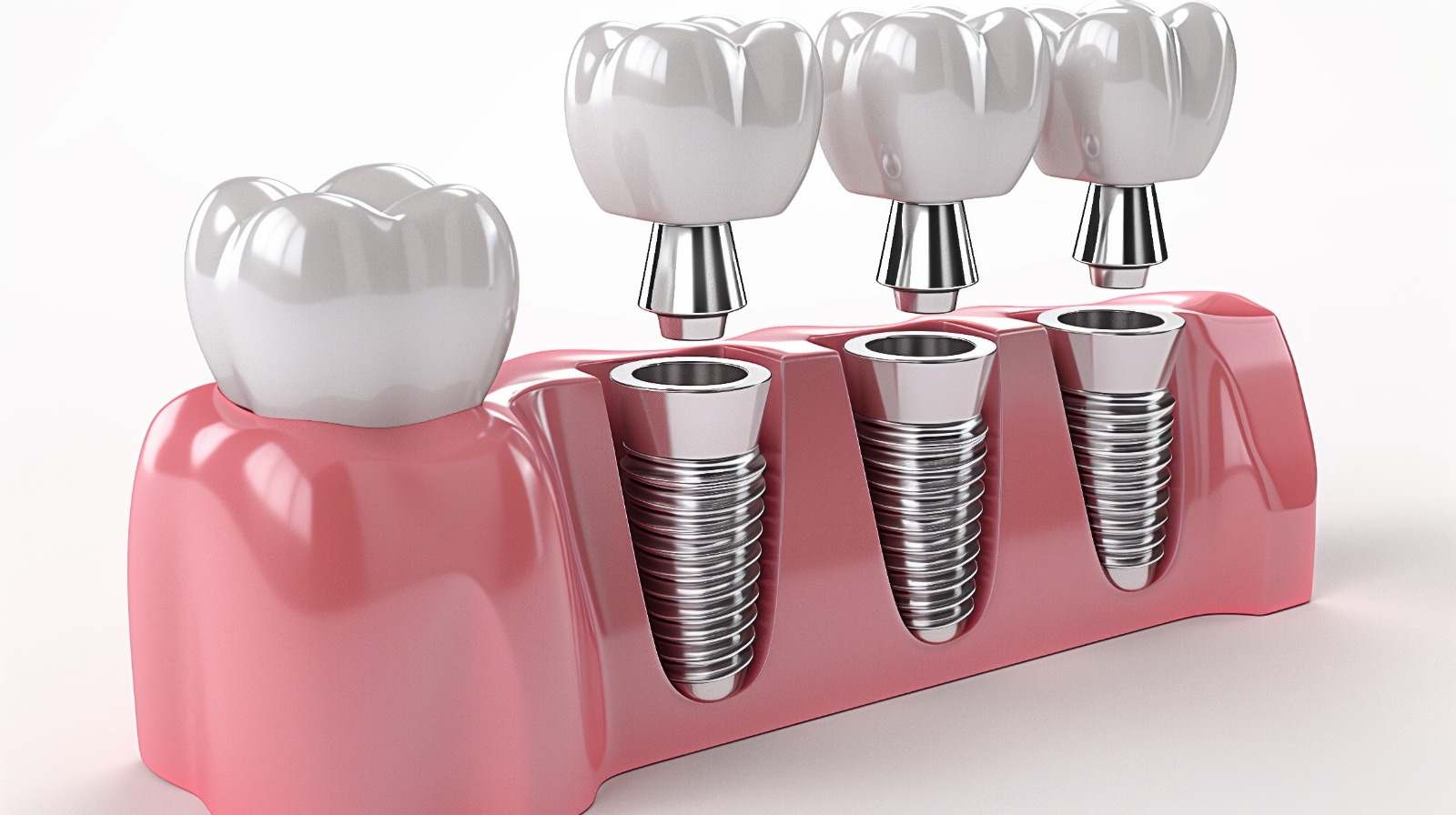
A complete single-tooth implant restoration may include the surgical implant fixture, the abutment that connects the implant to the final restoration, and the custom dental crown that becomes the visible replacement tooth. The treatment may also involve diagnostic imaging, treatment planning, an extraction, temporary restorations, bone grafting, or other services.
In Southern California, the total cost of replacing a single tooth with an implant can commonly reach several thousand dollars. The exact amount depends on the complexity of the case, the materials selected, the condition of the surrounding bone and gums, and whether additional procedures are needed.
It is important to be cautious when comparing advertised prices. A low introductory figure may refer only to the implant fixture and may not include the abutment, crown, imaging, extraction, grafting, sedation, or follow-up care. Patients should ask whether a quoted fee represents the complete treatment or only one stage of the process.
The most useful estimate is an itemized treatment plan based on a clinical examination and appropriate imaging. This allows your dentist to explain what is included and identify any procedures that may affect your final cost.
What Is Included in the Dental Implant Price?
A dental implant is not simply a replacement tooth that is placed during one appointment. It is a multi-stage treatment designed to replace the tooth from the root upward.
The implant fixture is a small, biocompatible post that is positioned in the jawbone. After placement, the surrounding bone gradually bonds with the implant through a process called osseointegration. This creates the stable foundation that distinguishes implants from removable tooth replacement options.
Once the implant is ready to support a restoration, an abutment is attached. The abutment serves as the connection between the implant and the crown. A custom crown is then designed to match the size, shape, and shade of the surrounding teeth.
Your total fee may include the examination, digital imaging, surgical planning, implant placement, abutment, crown, follow-up visits, and other necessary care. Some treatment plans bundle these services, while others list each stage separately. Understanding the structure of your estimate makes it easier to compare your options accurately.
The Number of Teeth Being Replaced
The number of missing teeth is one of the most significant factors affecting the dental implants cost Encinitas patients may encounter.
Replacing one tooth usually requires one implant and one crown. Replacing several teeth does not always require a separate implant for every missing tooth. In some situations, two implants can support an implant bridge that replaces multiple adjacent teeth.
Patients who are missing most or all of their teeth may be candidates for an implant-supported denture or a fixed full-arch restoration. These treatments use several strategically positioned implants to support an entire row of replacement teeth.
Although full-arch treatment costs more than replacing a single tooth, the cost per tooth may be lower because each missing tooth does not require its own implant. The most appropriate design depends on bone availability, bite forces, oral health, functional needs, and the patient’s treatment goals.
Whether a Tooth Extraction Is Needed
Some patients seek implant treatment after a tooth has already been removed. Others still have a damaged, infected, or fractured tooth that must be extracted before it can be replaced.
The complexity of the tooth extraction can influence the total cost. A tooth that is fully visible and easily accessible may be relatively straightforward to remove. A severely broken tooth, an impacted tooth, or a tooth with difficult root anatomy may require a more involved surgical extraction.
In selected cases, the tooth can be removed and the implant placed during the same appointment. This is often called immediate implant placement. However, immediate placement is not appropriate for every patient. Infection, bone loss, the condition of the extraction site, and the ability to achieve implant stability all affect the decision.
In other cases, the extraction site must heal before implant placement. Your dentist will recommend the sequence most likely to produce a stable and predictable result rather than simply choosing the fastest approach.
Bone Grafting and Jawbone Health
A dental implant depends on the surrounding bone for support. If the jawbone is too thin, too short, or too weak, bone grafting may be recommended before or during implant placement.
Bone loss can occur after a tooth has been missing for an extended period because the jaw no longer receives regular stimulation from the tooth root. Bone loss may also result from periodontal disease, infection, trauma, or the anatomy of the jaw.
A small graft placed at the time of an extraction may add a modest amount to the treatment cost. A larger graft or a more advanced procedure may increase both the expense and the healing time. For implants in the upper back portion of the mouth, a sinus augmentation may occasionally be needed if there is not enough bone beneath the sinus cavity.
Although grafting increases the initial investment, it may be essential to creating a stable foundation for the implant. Skipping a necessary graft in an effort to reduce costs could compromise the position, strength, or long-term outlook of the restoration.
The Type of Implant Restoration
The final restoration placed on top of the implant also affects the total price.
A single implant crown is different from an implant bridge, an implant-retained removable denture, or a fixed full-arch restoration. Each option requires different materials, laboratory procedures, design considerations, and levels of clinical complexity.
The material used for the restoration may also influence the fee. Dental ceramics can vary in strength, translucency, durability, and esthetic characteristics. A replacement for a highly visible front tooth may require additional customization to blend naturally with the surrounding teeth and gumline.
Your dentist will consider more than appearance when selecting a material. Bite forces, tooth position, grinding habits, available space, and the design of the opposing teeth all play a role. The goal is to create a restoration that looks natural while also functioning reliably.
Implant Location and Surgical Complexity
Not all implant sites are equally simple to treat. The location of the missing tooth can influence the complexity of planning and placement.
Front teeth are especially important to smile esthetics. Implant positioning must account for the surrounding gum tissue, bone contours, neighboring teeth, and the emergence of the final crown. Small differences in position can affect how natural the finished tooth looks.
Back teeth experience greater chewing forces and may require a wider or differently designed implant. Upper back teeth may also be close to the sinus cavity, while lower implants must be planned around important nerves and anatomical structures.
Detailed imaging helps the dentist evaluate bone dimensions and identify nearby anatomy before treatment begins. The need for advanced imaging or more complex surgical planning may be reflected in the overall fee, but it also supports safer and more precise treatment.
Diagnostic Imaging and Digital Planning
Modern implant dentistry relies heavily on accurate diagnosis and careful planning. Standard dental X-rays provide helpful information, but three-dimensional imaging may be recommended for many implant cases.
A cone beam computed tomography scan provides a detailed view of the jawbone, nearby teeth, nerves, sinuses, and other structures. This information helps determine the appropriate implant size, angle, and position.
Digital impressions or intraoral scans may also be used to plan the final restoration. In some cases, a surgical guide is created to help transfer the digital plan accurately to the mouth during implant placement.
These technologies can add to the cost of treatment, but they also allow the dental team to identify potential concerns in advance and coordinate the surgical and restorative phases more precisely.
Sedation and Patient Comfort
Many patients receive dental implants using local anesthetic, which numbs the treatment area. Some patients may benefit from additional sedation because of dental anxiety, a strong gag reflex, medical considerations, or the length and complexity of the procedure.
The type of sedation selected can affect the final cost. Options may range from mild relaxation methods to deeper forms of sedation that require additional monitoring and preparation.
Sedation is not necessary for every dental implant procedure. During your consultation, discuss any anxiety or previous dental experiences that concern you. Your dentist can explain the comfort options available and whether they are appropriate for your health and treatment plan.
Does Dental Insurance Cover Implants?
Dental insurance coverage for implants varies by plan. Some policies provide partial benefits for the implant, crown, extraction, or related procedures. Other plans may exclude implant placement but provide a benefit based on a less expensive alternative, such as a bridge or removable denture.
Annual maximums, waiting periods, missing-tooth clauses, deductibles, and frequency limitations can all affect reimbursement. Even when implant treatment is covered, insurance may pay only part of the total fee.
Before beginning care, the dental team can help review your benefits and prepare an estimate of what your plan may contribute. However, insurance estimates are not guarantees of payment. The insurance company makes the final decision after reviewing the claim.
Patients may also be able to use funds from a health savings account or flexible spending account for eligible implant expenses. Financing arrangements or phased treatment may provide additional ways to manage out-of-pocket costs.
Why the Lowest Advertised Price May Not Be the Best Value
It is understandable to compare fees when considering a significant dental procedure. However, the lowest advertised dental implant price San Diego patients encounter may not represent the best overall value.
A very low price may exclude important parts of treatment, use different materials, or provide limited follow-up care. It may also be based on an uncomplicated case that does not reflect your individual needs.
When comparing implant providers, ask who will perform each stage of treatment, what training and experience they have, which procedures are included, what type of implant system and restorative materials will be used, and how complications or future maintenance will be handled.
Continuity of care can also be valuable. When the dental team understands your overall oral health, bite, periodontal condition, and long-term goals, implant treatment can be planned as part of a complete approach rather than as an isolated procedure.
Cost matters, but predictability, safety, communication, and long-term support matter as well.
Are Dental Implants Worth the Cost?
Dental implants generally require a larger initial investment than removable dentures and may cost more upfront than a traditional bridge. Many patients still choose them because of their stability, comfort, appearance, and ability to function more like natural teeth.
A traditional bridge typically requires the neighboring teeth to be reshaped so they can support the restoration. An implant replaces the missing tooth without relying on adjacent teeth for support. This can be especially valuable when the neighboring teeth are healthy.
An implant also transfers chewing forces into the jawbone, which helps maintain stimulation in the area of the missing tooth. Removable appliances do not provide the same type of root-level support.
Dental implants are not immune to problems. The surrounding gums and bone must remain healthy, and the crown may eventually need repair or replacement because of wear. However, with good planning, daily care, and regular professional maintenance, implants can provide many years of function.
The question is not simply whether an implant costs more today. It is whether the treatment offers the comfort, stability, convenience, and long-term value that matter to you.
How Long Do Dental Implants Last?
The implant fixture and the visible crown should be thought of as two different components.
The implant fixture is designed to remain integrated with the jawbone for many years. Its longevity depends on oral hygiene, gum health, bone quality, implant position, smoking or tobacco use, medical conditions, grinding habits, and regular dental care.
The crown experiences daily chewing forces and may wear, chip, loosen, or need replacement over time. This does not necessarily mean that the implant itself has failed. In many cases, the restoration can be repaired or replaced while the implant remains stable.
Patients can protect their investment by brushing thoroughly, cleaning around the implant, attending preventive dental visits, and wearing a nightguard when recommended. Implant maintenance is particularly important because inflammation around an implant can damage the supporting tissues if it is not addressed.
Can You Get a Dental Implant Immediately After Losing a Tooth?
Immediate implant placement may be possible in certain situations, but it depends on the condition of the treatment site.
There must be enough healthy bone to stabilize the implant, and active infection or significant tissue damage may change the recommended timing. Even when an implant is placed immediately, the final crown may not be attached that day.
Some patients receive a temporary tooth during healing, especially when the missing tooth is visible in the smile. Temporary restorations must be carefully designed so that excessive pressure does not interfere with integration.
Other patients benefit from a staged process that allows the extraction site or bone graft to heal before implant placement. A longer timeline does not mean the treatment is less advanced. In many cases, waiting is the safest way to improve the predictability of the final result.
Alternatives to Dental Implants
An implant is not the only way to replace a missing tooth. Depending on your needs, alternatives may include a traditional dental bridge, a removable partial denture, or a complete denture.
A bridge can provide a fixed replacement without implant surgery, but it usually requires support from neighboring teeth. A removable partial denture may replace multiple teeth at a lower initial cost, although it does not offer the same stability or function as a fixed implant restoration.
For patients missing all or most of their teeth, conventional dentures remain an option. Implants may also be used to improve the retention and stability of a denture.
There is no single solution that is right for everyone. Health, anatomy, budget, esthetic priorities, treatment timeline, and personal preferences should all be considered.
Getting an Accurate Dental Implant Estimate in Encinitas
An online range can help you understand the general level of investment, but it cannot account for your bone structure, gum health, bite, medical history, or the specific tooth being replaced.
During an implant evaluation at Encinitas Family Dentistry, the dental team can examine the area, review the condition of the surrounding teeth and gums, and determine what imaging is needed. You can then receive a treatment plan outlining the recommended steps and associated fees.
This is also the right time to ask questions about the expected timeline, temporary tooth options, healing, insurance benefits, financing, and alternative treatments.
A clear estimate should help you understand not only the total cost, but also what is included and why each stage is being recommended.
Schedule a Dental Implant Consultation at Encinitas Family Dentistry
The dental implants cost in Encinitas depends on the number of teeth being replaced, the health of your jawbone, the type of restoration, and whether you need additional procedures. Because of these variables, the best way to answer “how much are dental implants?” is through a personalized evaluation.
Our dentist in Encinitas can help you explore your tooth replacement options and understand the benefits, costs, and timeline associated with each one. Whether you are replacing one tooth, several teeth, or considering a more comprehensive restoration, careful planning is the first step toward a result that feels comfortable, functions well, and fits naturally into your smile.
Contact Encinitas Family Dentistry to schedule a consultation and receive an individualized dental implant treatment plan.