
That dull ache at the back of your jaw has a way of turning into a real worry. You are not sure if it needs to come out, what the day will look like, or how rough the recovery will be.
Here is the short version. Wisdom tooth removal is a routine procedure. Most cases run from the first exam to a healed socket over a few weeks, with the hardest part lasting only the first few days. Dr. Gregory Skeens, D.D.S., your trusted dentist in Encinitas removes wisdom teeth at our clinic and plans each case with 3D imaging before anyone picks up an instrument.
What to Know Before Your Appointment
- The procedure itself usually takes 30 to 90 minutes, depending on how many teeth come out and whether any are impacted.
- Most patients feel the worst swelling and soreness on days two and three, then improve steadily.
- Full recovery commonly takes 7 to 10 days, longer for impacted teeth set deep in the jaw.
- Dry socket is the main complication to watch for, and it shows up as sharp pain 1 to 3 days after surgery.
- If you choose sedation, arrange a ride home before your appointment. You will not be able to drive.
Why Do Wisdom Teeth Need to Come Out?
Wisdom teeth are the third molars at the very back of your mouth, and they are the last teeth to arrive, usually between ages 17 and 25. Many mouths do not have room for them. When that happens, the teeth can press on neighbors, get stuck under the gum, or sit at an angle.
Not every wisdom tooth has to go. Some sit in place, fully erupted, and cause no trouble. Dr. Skeens takes a conservative approach and recommends removal only when there is a clear reason.
A wisdom tooth often needs to come out for pain, repeated gum infections around a partly erupted tooth, crowding, decay a cleaning cannot reach, or impaction that traps the tooth below the gumline.
How Dr. Skeens Decides If Removal Is Needed
The decision starts with an exam and imaging. Dr. Skeens looks at how the wisdom teeth sit, how close they are to nearby nerves, and whether you can clean and maintain them. A clear picture of the roots and angle guides the whole plan.
At Encinitas Family Dentistry, this step uses 3D cone beam imaging, also called CBCT. A standard flat X-ray shows the teeth from one angle. A 3D scan shows the roots, the nerve canal, and the bone from every direction. That detail matters most for lower wisdom teeth, which sit near a major nerve.
If removal is the right call, you and Dr. Skeens talk through the plan, the anesthesia options, and what your recovery will look like. You always have a choice, and Dr. Skeens discusses the costs before anything begins.
What Happens During the Procedure?
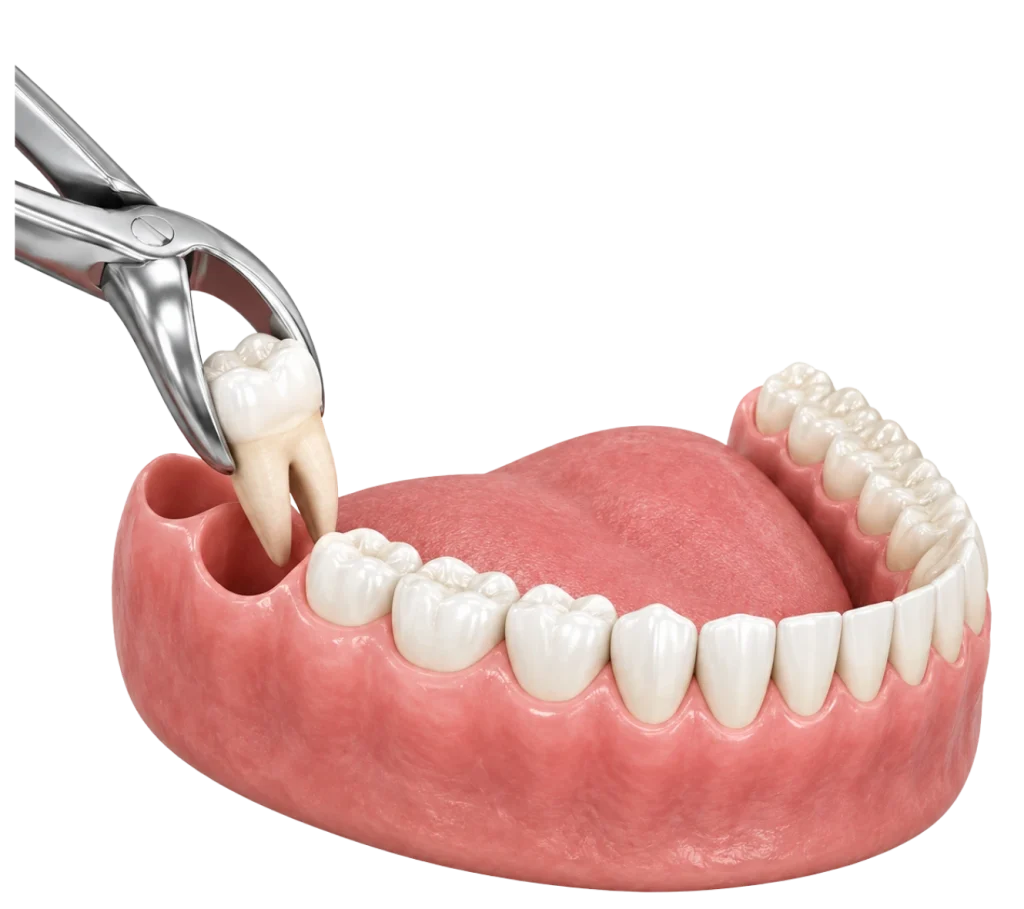
Wisdom tooth removal is an outpatient procedure. You go home the same day. The appointment usually runs 30 to 90 minutes, depending on how many teeth come out and how they sit in the bone.
First, Dr. Skeens numbs the area with local anesthetic. If you are anxious or the case is more involved, sedation options are available, including nitrous oxide or oral conscious sedation. A fully erupted tooth often lifts out in a few minutes. An impacted tooth may need a small gum incision, and Dr. Skeens sometimes sections the tooth into pieces so it comes out through a smaller opening.
Once the tooth is out, the team cleans the site and places stitches if needed. You rest briefly, then head home to begin recovery. Patients who had sedation feel groggy and need a driver.
Does It Hurt During the Removal?
You should not feel pain during the removal itself. Local anesthetic numbs the tooth and the surrounding tissue completely. You may feel pressure or movement, but not sharp pain. Soreness arrives later, once the numbness wears off, and that is the part aftercare is built to manage.
What Recovery Looks Like, Day by Day
Recovery follows a fairly predictable path. Most patients feel the sharpest soreness and swelling on days two and three, then improve from there. Gum tissue commonly heals over 7 to 10 days, though impacted cases can take a little longer.
Here is a general timeline:
- Day 1: Numbness fades over a few hours. Expect some bleeding, swelling, and soreness. Rest and use ice.
- Days 2 to 3: Swelling usually peaks. Keep up cold compresses and soft foods. Pain is most noticeable now.
- Days 4 to 7: Swelling eases and comfort returns. Many people return to normal routines but avoid hard chewing near the site.
- Day 7 onward: Most patients feel close to normal. Deeper bone healing continues underneath for several more weeks.
Everyone heals at a slightly different pace. Your age, the number of teeth removed, and whether a tooth was impacted all shape the timeline.
How Do You Care for the Site After Surgery?
Good aftercare protects the blood clot that forms in the socket. That clot is the foundation for healing, and your main goal in the first day is to leave it alone.
For the first 24 hours, skip straws, spitting, smoking, and vigorous rinsing. The suction and pressure can pull the clot loose. Stick to soft, cool foods like yogurt, smoothies eaten with a spoon, and lukewarm soup. Keep your head slightly raised and rest.
After the first day, gentle salt-water rinses help keep the area clean. Brush your other teeth normally, but stay gentle near the socket. Dr. Skeens sends every patient home with specific instructions, and following them closely is the best way to avoid problems.
What Is Dry Socket and How Do You Avoid It?
Dry socket is the most common complication after wisdom tooth removal. It happens when the blood clot over the socket comes loose too early, which leaves bone and nerves exposed. According to the Mayo Clinic, the pain usually begins 1 to 3 days after the tooth comes out and can feel sharp and throbbing.
Dry socket is more common after lower wisdom teeth and after difficult or impacted extractions. The best prevention is simple: protect the clot. Avoid straws, smoking, and spitting during the first day, and follow your aftercare instructions carefully.
If a throbbing pain sets in a couple of days after surgery, especially pain that spreads toward your ear, call the office. Dry socket responds well to treatment. The team can clean and dress the socket to ease the pain and get healing back on track.
When to Call the Office
Most recoveries are uneventful, but a few symptoms are worth a phone call. Trust your instincts. If something feels off, it is always fine to check in.
Call Encinitas Family Dentistry if you notice:
- Pain that gets worse after day three instead of better
- Bleeding that does not slow after the first several hours
- A fever, or swelling that keeps growing after day three
- Pus or a bad taste that does not clear with rinsing
- Trouble swallowing or breathing, which needs urgent care
You know your body. Calling early beats waiting and worrying through the weekend.
Schedule a Wisdom Tooth Consultation in Encinitas
The hardest part of wisdom teeth is often the not knowing. A consultation turns the guesswork into a clear plan built around your teeth, not a general rule.
Dr. Skeens earned his Doctor of Dental Surgery degree at Loma Linda University School of Dentistry and completed an Advanced Education in General Dentistry residency. He has cared for patients at Encinitas Family Dentistry since 2007 and uses 3D imaging to plan each extraction around the roots and nerves specific to your mouth. For patients who feel nervous, nitrous oxide and oral conscious sedation are available to keep the visit comfortable.
If a wisdom tooth is bothering you, or a dentist has told you removal may be coming, call Encinitas Family Dentistry at (760) 944-9288 to schedule an evaluation with Dr. Skeens.